Between Two Deserts
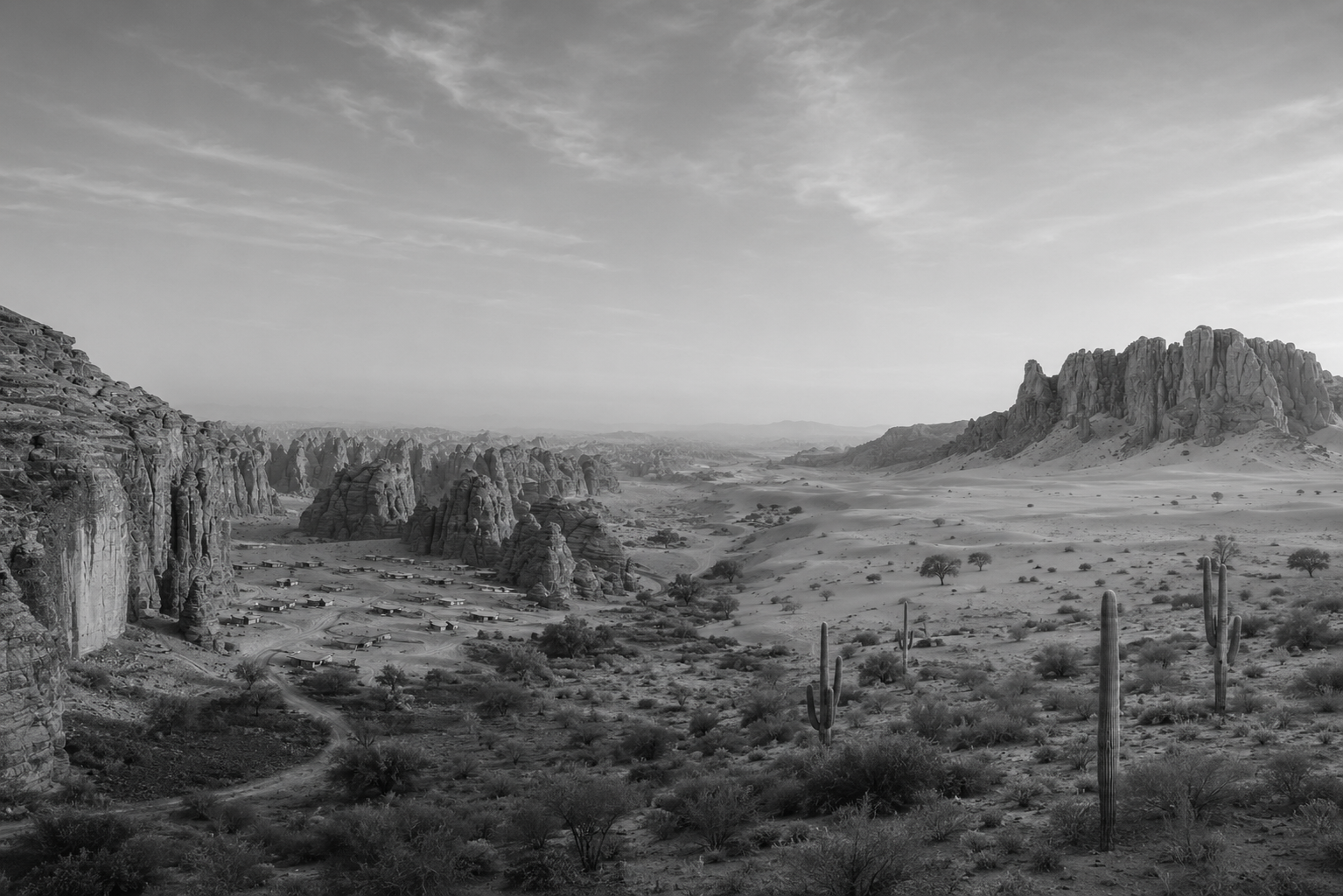
Climate, Memory, and Architecture Across Riyadh and the American Southwest
Growing up in Riyadh and later practicing architecture in the American Southwest taught me the same lesson, despite the geographic differences between the two places: in desert cities, climate should be treated as a central part of the architectural experience, not simply as an external condition surrounding the building.
A person’s experience of a place begins before entering it. It can be seen in the search for shade, the instinct to move quickly across exposed spaces, and the immediate sense of whether an entrance feels welcoming or closed off.
For this reason, I believe shade, depth, and daylight should be fundamental architectural decisions from the beginning of the design process, rather than technical solutions added after the main idea has already been established.
In adaptive reuse projects, we may preserve the existing structure while completely changing the way people encounter the building. A deeper entrance, carefully considered openings, and the transformation of a dark interior into a space shaped by natural light can redefine movement and spatial experience without erasing everything that came before.
For me, good desert architecture should not be reduced to a recognizable visual style or judged only by its exterior appearance. Its real value lies in its ability to transform environmental performance into a tangible human experience that remains memorable, while still creating architecture with a strong visual presence.